Delhi’s winters bring many things — festivals, food, and a cultural vibrance unique to the capital — but they also bring the one thing everyone dreads: Delhi air pollution. For years, this problem has grown from a seasonal inconvenience into a full-blown public health emergency. Today, the toxic haze hanging over the city is not just an environmental issue; it is a silent killer affecting millions of lives.
In this blog, we will explore how Delhi air pollution is harming our bodies, the specific ways it affects different organs, and most importantly, the practical solutions individuals and communities can use to protect themselves. Understanding the real impact of pollution isn’t just crucial — it is essential for survival in one of the world’s most polluted cities.
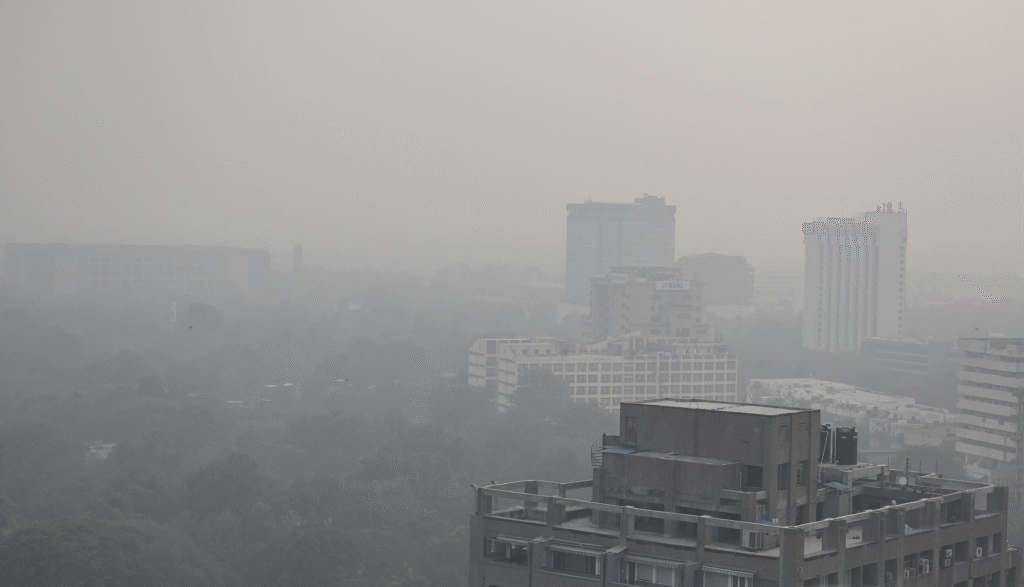
Delhi has long been known for its air pollution, but recent studies show just how severe and dangerous the problem has become — not just for the environment, but for human health. According to a latest report by Air Quality Life Index (AQLI, 2025), residents of Delhi are losing an average of 8.2 years of life expectancy because of chronic exposure to fine particulate pollution (PM2.5) — compared with air that meets the safe standards. Business Standard+2Hindustan Times+2
In fact, other reports indicate that life expectancy reduction could be as much as 11.9 years compared to air meeting the strictest global guidelines. The Times of India+2The Economic Times+2
These grim findings paint a harsh truth: breathing Delhi’s air is not just uncomfortable — it’s slowly cutting lives short.
Health Impacts: More Than Just Bad Lungs (Delhi Air Pollution)
While respiratory issues are the most obvious outcome, the harm from air pollution goes much deeper — often affecting organs and systems across the body.
• Respiratory & Cardiovascular Damage
Tiny particles like PM2.5 can travel deep into the lungs and from there into the bloodstream. Regular inhalation can exacerbate or trigger conditions such as asthma, bronchitis, reduced lung function, and even heart disease.
• Brain & Cognitive Effects
Emerging research — and doctors in Delhi — are increasingly warning about neurological consequences. Chronic exposure to poor air quality has been linked to headaches, dizziness, reduced focus and “brain-fog,” and even increased risk of strokes.
Pollutants may trigger inflammation and oxidative stress, compromising blood flow to the brain and damaging neurons over time.
• Joint & Autoimmune Problems
Air pollution doesn’t spare the rest of the body. Recent findings suggest that long-term exposure to particulate matter may contribute to inflammation that triggers or worsens joint pain, arthritis and other autoimmune or inflammatory conditions.
• Vulnerable Populations at Higher Risk
Children, the elderly, and people with pre-existing health conditions are particularly vulnerable. For children, polluted air can impair lung development and long-term health. For older adults, the risks of cardiovascular, respiratory, and neurological diseases increase steeply.
Why Delhi’s Air Gets So Toxic
Several factors combine to make Delhi’s air especially dangerous:
- High levels of fine particulate matter (PM2.5) from vehicular emissions, industrial activity, construction dust, and seasonal stubble-burning in neighbouring regions.
- Urban sprawl and heavy traffic, which increases exhaust and vehicular pollution.
- Meteorological conditions, especially in winter, that trap pollutants close to the ground, preventing dispersion.
- Limited green cover and rapid urbanization which reduce natural “air filtration” by trees and increase pollution concentration.
Given all these factors — and the rising population density — breathing clean air in Delhi is becoming a rare privilege rather than a given right.
Read:- https://thefrontiervibe.com/best-diet-for-delhi-pollution/
What You Can Do: Personal & Collective Solutions to Protect Health
Even if pollution levels remain high city-wide, there are practical steps you and your family can take to reduce the health impact. Also, bigger structural changes — when adopted widely — can help improve air quality over time.
✅ Personal / Household-Level Measures
- Use quality air purifiers indoors: These reduce indoor pollutants, especially on high-pollution days.
- Wear proper masks outdoors: On days with poor air quality, wearing an N95 (or equivalent) mask can reduce inhalation of harmful particles.
- Avoid outdoor activity during peak pollution hours: Limit or avoid strenuous outdoor exercises — walking, running — when AQI is “Poor”, “Very Poor”, or “Hazardous.”
- Keep windows/doors closed when air outside is bad: Try to minimize bringing polluted outdoor air inside, especially during smog events.
- Maintain a healthy lifestyle: Good nutrition, regular exercise (indoor/cold-weather friendly), and adequate rest can help your body better cope with pollution stress.
🏡 Community & Policy-oriented Actions
- Plant and support green cover: Trees are natural air filters. Promoting urban gardening, tree-planting drives helps absorb pollutants over time.
- Support clean-energy & emission-reduction policies: Advocacy for stricter vehicle emission norms, industrial regulation, clean public transport, and restrictions on stubble burning or open-burning helps reduce pollution at the source.
- Raise awareness & demand accountability: Public pressure and civic engagement — from individual neighbours to large communities — can influence authorities and industries to enforce pollution control.
- Stay informed, check AQI regularly: Use reliable air-quality monitoring sources to plan daily outdoor activity accordingly. On bad days, keep outdoor exposure minimal.
What Communities and Governments Must Do
While individual protection is important, long-term change is possible only with collective action. Community-driven and policy-level steps can significantly reduce Delhi air pollution, such as:
- Stricter regulations on construction dust
- Expanding electric public transport
- Increasing green cover
- Implementing better waste-management systems
- Supporting farmers with alternatives to stubble burning
The government has initiated several measures, but consistent enforcement and public participation are the real keys to long-term improvement.
Conclusion: Why Ignoring the Smog Is Not an Option
Delhi air pollution crisis is not just about discomfort or inconvenience. It’s a serious public-health emergency — one that silently undermines our lungs, our hearts, our brain, and our life expectancy. For many, the damage starts early: in childhood, or during early adulthood.
But — each of us also has the power to respond. By combining personal protective measures with community action and civic pressure, we can push for a cleaner, healthier future. The cost of inaction is too high — for individuals, for families, and for the city as a whole.
Today, protecting ourselves from Delhi air pollution is not merely a health recommendation — it is a responsibility
Links: Best N95 Mask- https://amzn.to/4p3ER7o
Best N95 Mask- https://amzn.to/48bxg0L
Best and budget friendly Air Purifier- https://amzn.to/4iuZeYx
1 thought on “Delhi Air Pollution: A Growing Public-Health Emergency”